How Max Payne plays: bullet time, shootdodge, painkillers and weapons
Slow motion you switch on yourself, a dive you can keep shooting from, and painkillers to patch Max up. How the three games play, and what the second and third changed.
Bullet time
Slowing the fight down
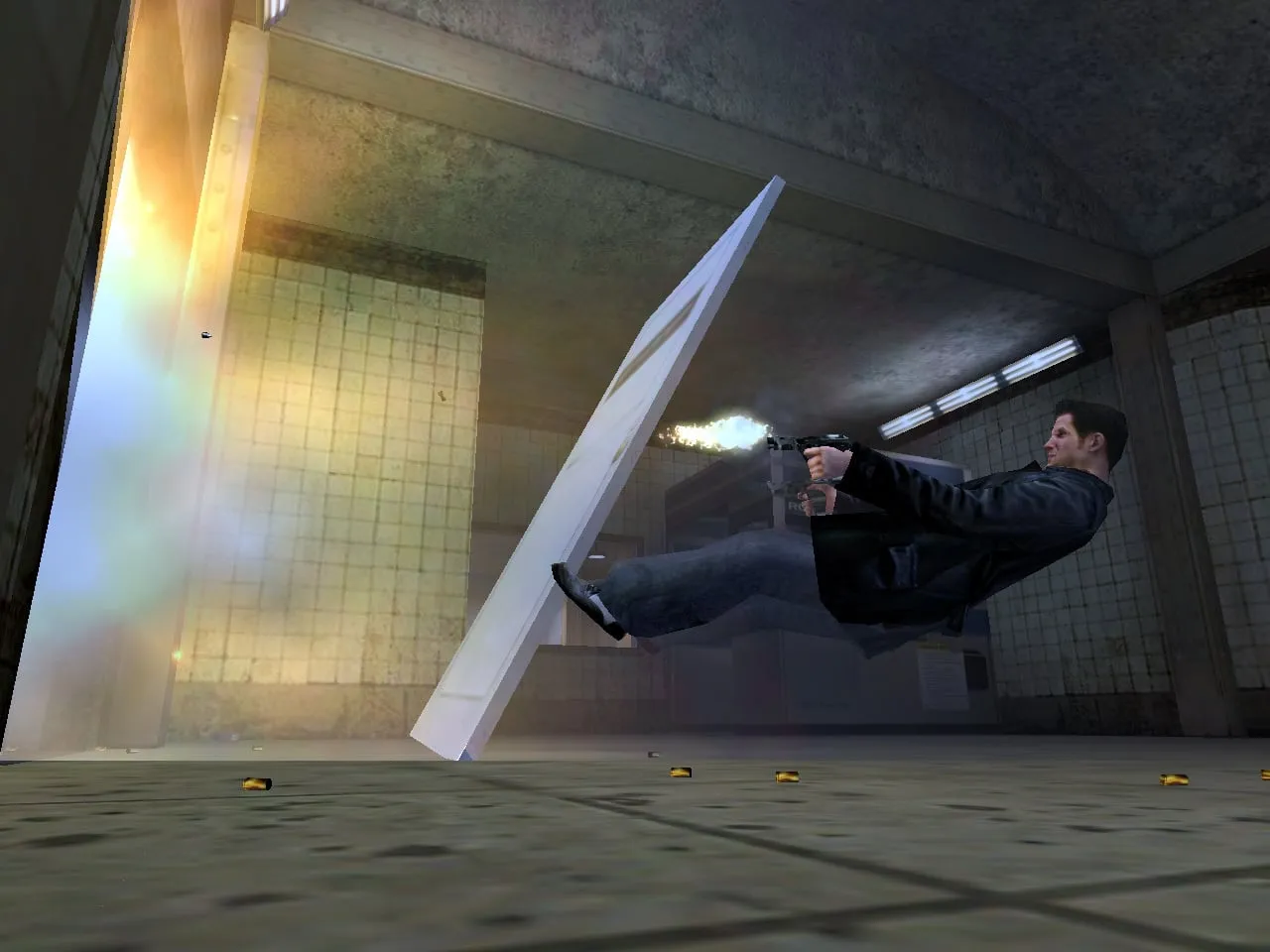
Trigger bullet time standing or in mid-dive and, for a short while, everything slows down, Max included, while you get time to react to each shot and aim with care. In the first game an hourglass next to the health figure shows how much is left, and only kills fill it up again. Max has little health there — Kotaku points out that even one stray bullet can be a disaster — and slow motion is what evens the odds.
The idea came from Hong Kong action films, John Woo’s above all. Lead designer Petri Järvilehto wanted slow motion at the core of the game, and the team made it a resource for the player to spend.
Shootdodge
The dive
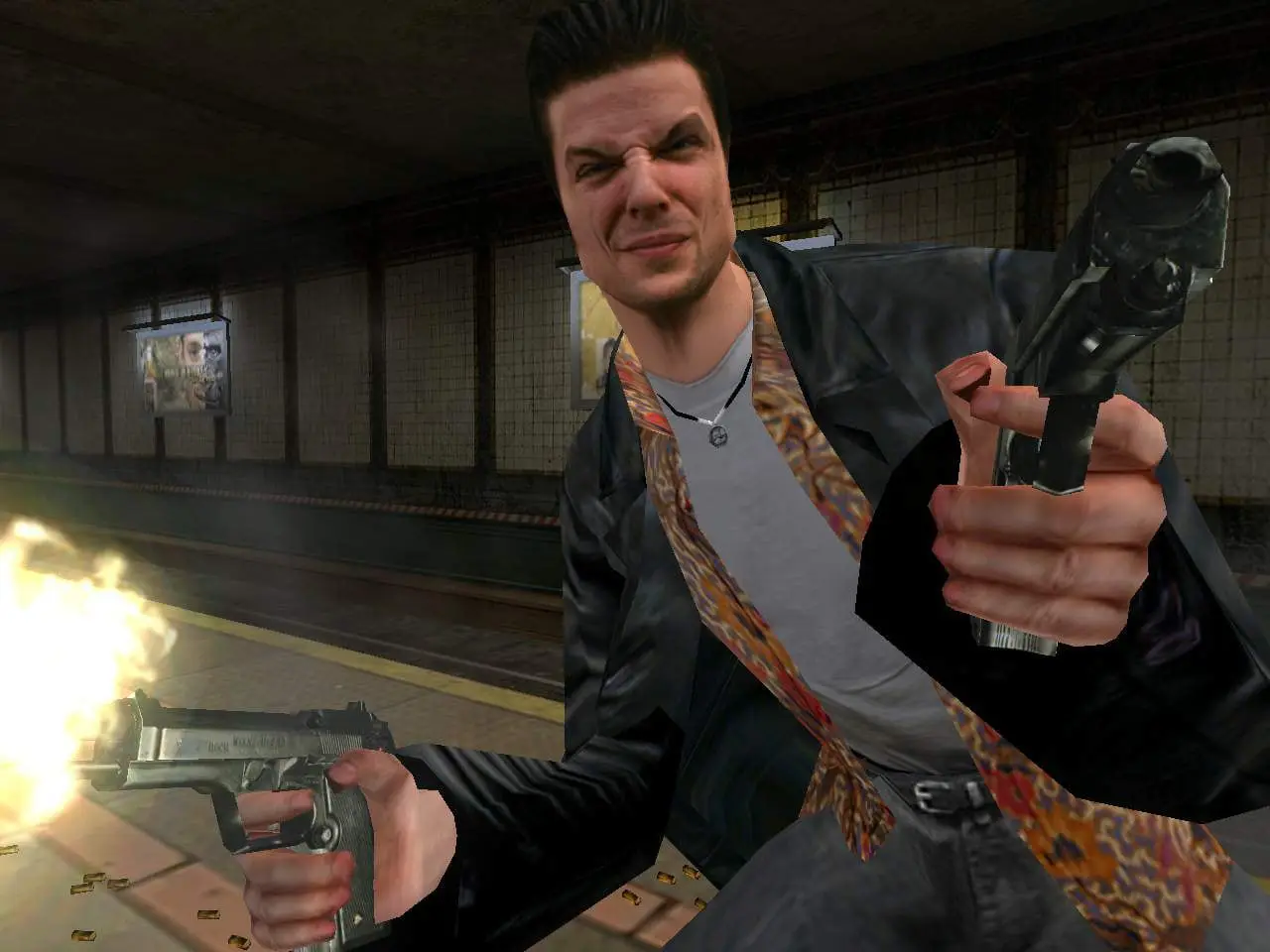
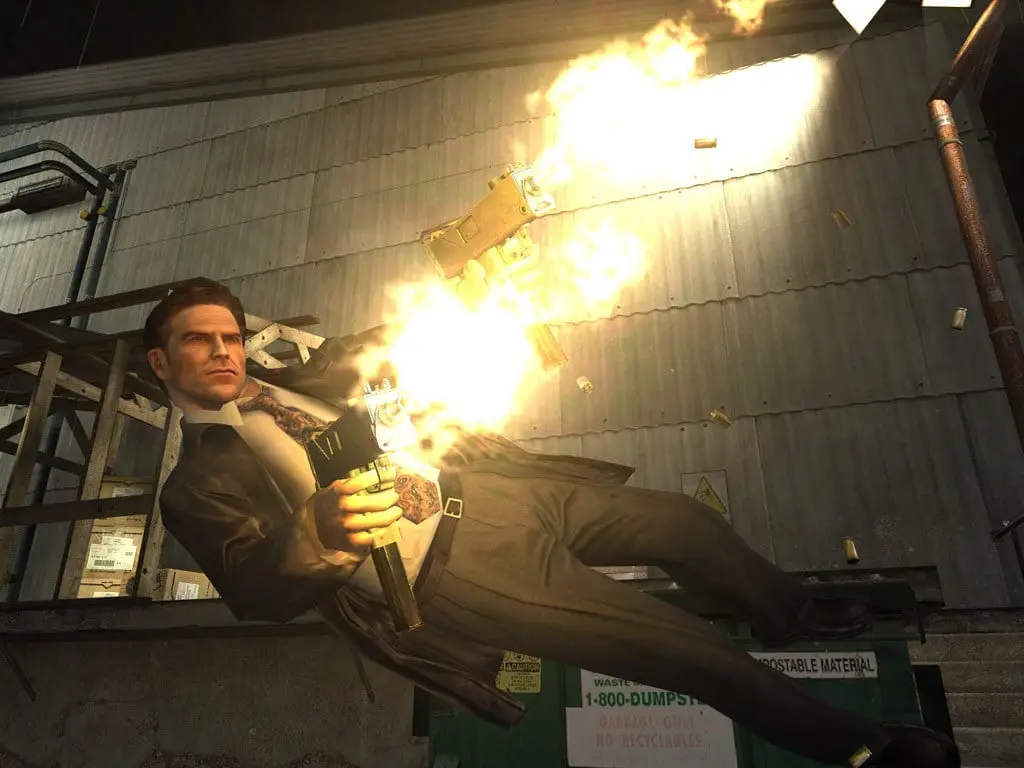
The dive sends Max flying in whatever direction you choose, in slow motion, gun still firing; a Rockstar representative called it the shootdodge at a 2012 preview of Max Payne 3. In Max Payne 2 the dive slows time without draining the meter. In Max Payne 3 you can dive as often as you like, and the price is the landing: Max ends up on the floor, an open target, though he can keep shooting from there at any angle.
Painkillers
Pills to patch Max up
In the first game a white figure on screen turns red as Max takes hits, and only painkillers, lying around the level or dropped by enemies, bring his health back. Max Payne 2 hands out more of them, and makes enemies a little dumber, if you keep dying.
Max Payne 3 keeps the pills and adds the Last Stand: when your health runs out and you have at least one painkiller, you get a moment to shoot whoever hit you last and stay alive, at the cost of all your remaining bullet time. In its story, health does not come back by itself, and IGN’s review liked the pressure: hide behind a pillar hoping to heal and you never will, while the pillar crumbles.
Weapons
From a Beretta to three guns at most
In the first game Max starts with a Beretta and picks up more as he goes: other handguns, shotguns, assault rifles and grenades, from a baseball bat to an M79 grenade launcher. Berettas and Ingrams also come in pairs, one in each hand, for more firepower at the cost of more ammo. Max Payne 2 gives grenades and Molotovs a slot of their own and lets Max pistol-whip anyone up close.
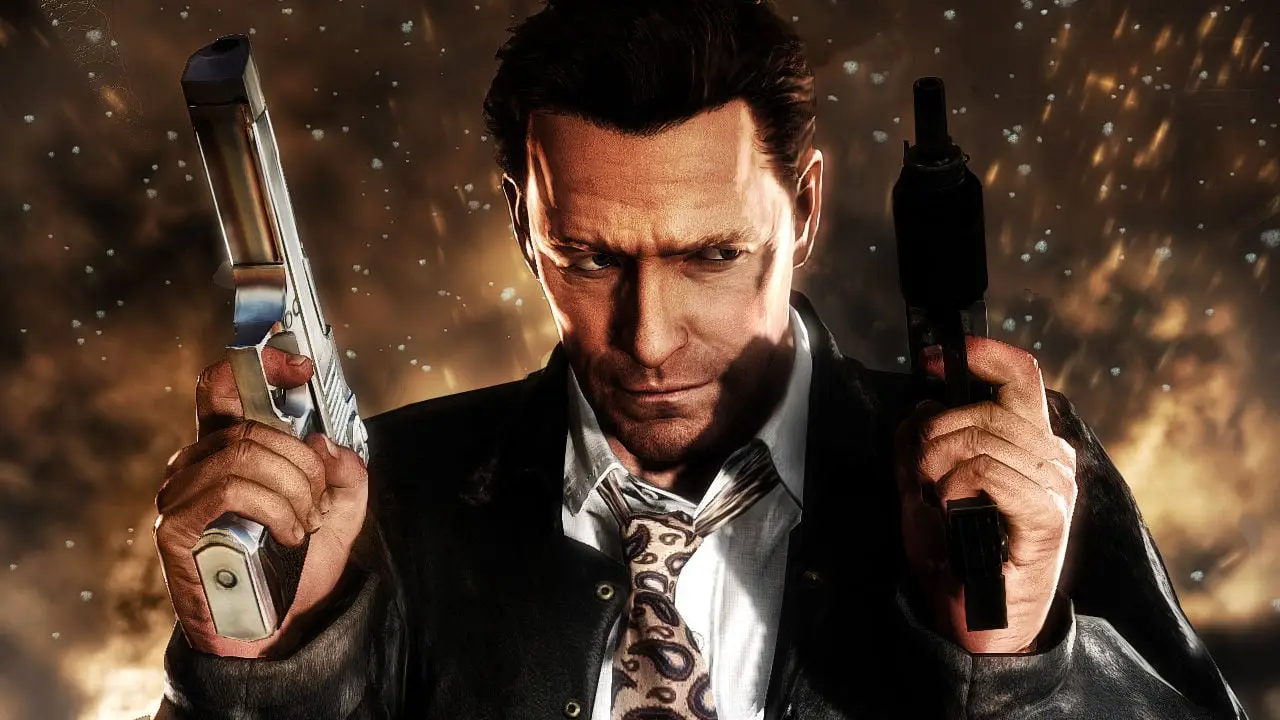
Max Payne 3 puts a limit on it: two one-handed guns and one two-handed weapon, picked from a weapon wheel. Take a gun in each hand and Max drops the two-handed one; everything he does carry stays visible on him, even in cutscenes. A sawn-off shotgun counts as one-handed, so you can fire two at once — a first for the series, one Steam guide notes.
Max Payne 2
Bullet time 2.0
Remedy rebuilt slow motion for the sequel and called it version 2.0. Every kill in a streak makes Max faster and hands back part of the meter, which now also refills slowly by itself; the screen turns sepia while it runs, and reloading in slow motion becomes a spin that lets Max look around the room. The point was to push players into the fight instead of waiting behind cover.
Havok physics came in too: crates you hide behind topple under fire and bodies drop as ragdolls. In several levels you play as Mona Sax instead of Max.
Max Payne 3
Cover, free aim and Euphoria
Rockstar’s game brought the first cover system to the series, and its enemies do not wait for you to pop out: at a preview in March 2012 Engadget saw them flank Max under covering fire, and Rockstar’s staff reminded the writer to use the shootdodge. It runs on the RAGE engine with Euphoria animating the bodies, and goes from cutscene to gunfight with no loading screens.
Aiming on a controller comes in three settings: Hard Lock pulls the crosshair firmly onto enemies, Soft Lock nudges it, Free Aim leaves it to you. You start on Easy, Medium or Hard; finishing on Hard opens Hardcore, which is stingy with health and bullet time, and Old School, which takes the Last Stand away.
Modes
New York Minute and the rest
The first game already had New York Minute, which puts a clock on every chapter, alongside the Hard-Boiled and Dead on Arrival difficulties; beat Dead on Arrival for The Last Challenge, a fight with endless bullet time. Max Payne 2 brought back New York Minute, scored on how fast you clear each level, and added Dead Man Walking, where you hold out against enemies that keep coming.
Max Payne 3 gathers its challenges in an Arcade mode: Score Attack replays story levels for points, and New York Minute runs on a clock that kills top up. Its Hardcore version runs the whole campaign on one timer with no checkpoints, and dying sends you back to the start. The game was also the first in the series with online play, up to 16 players, including Gang Wars and Payne Killer; on PS3 and Xbox 360 it was switched off in September 2021.
More from the series
- Max Payne 3 walkthrough: all chapters, golden guns, clues and trophiesGuide
- Max Payne cheats: codes, unlocks and trainersGuide
- The best Max Payne mods: from the Kung Fu mod to RTX RemixGuide
- Max Payne (2001): the original game, its ports and the mobile versionGame
- Games like Max Payne: what to play nextArticle
See it in motion
Rockstar Games keeps a video on Max Payne 3’s bullet time, part of its Design and Technology series, on its own site. We link to it rather than embed anyone’s video.
Rockstar’s bullet time video