Max Payne quotes: the best lines from all three games
Lines spoken in all three games, each with the chapter where you hear it, plus who wrote them and who gave Max his voice.
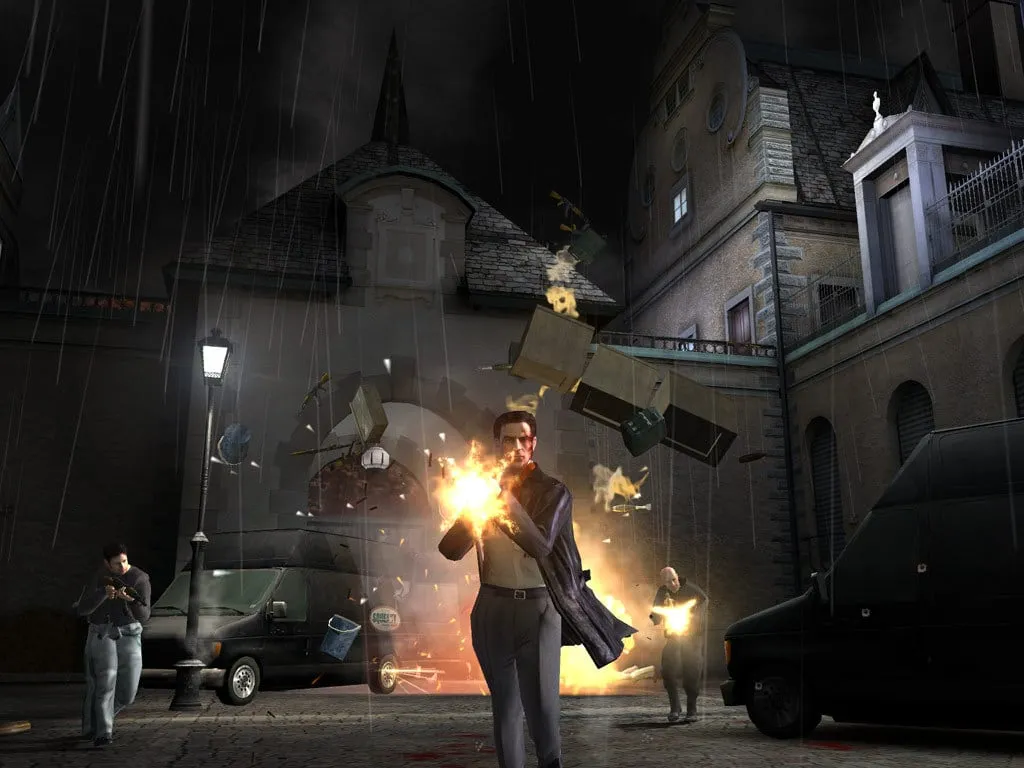
Pictured: Max Payne 2 (2003), picked for the game, not for any line below
The voice
A cop who thinks in metaphors
Max tells his own story. Both Remedy games are framed as Max looking back on what happened, and in Max Payne and Max Payne 2 he narrates over graphic-novel panels. Inside his head he talks in metaphors and wordplay that often clash with what he actually says to people. Sam Lake wrote the first two games; Dan Houser, Michael Unsworth and Rupert Humphries wrote Max Payne 3. James McCaffrey voiced Max in all three. By his own account, the first game meant about six hours a day in the booth and some 400 pages of script, and he said he had never played it.
The panels were a deliberate choice: Remedy found comic pages with voice-overs more effective and less costly than animated cutscenes, because a panel makes the player read it for themselves. Max Payne 3 dropped the drawn panels for cutscenes that run straight into play, with no loading screens, but Max still talks over them.
Not every critic loved the style. In a December 2001 review, IGN called the narration excellent but found far too much of it, with metaphors that never let up. In 2012, IGN’s review of Max Payne 3 praised how McCaffrey delivers the script’s many “Chandlerlisms.” Every spoken line quoted below comes with its game and the chapter where you hear it.
Max Payne · 2001
Three lines from The American Dream
“My cover had been blown. The door slammed shut behind me. And then I was dodging bullets like raindrops.” — Chapter 3, “Playing It Bogart.” Max narrates it on a graphic-novel page as he walks into the hotel of Jack Lupino, the mob boss he thinks set up the robbery and killed his friend.
“Karaoke was never my strong point” — Chapter 8, “Ragna Rock.” It is one of the game’s hidden lines: in the nightclub’s room with the drum kit and the microphones, walk up to the mics and use them, and Max says it.
“Thank you.” — Chapter 2, “Live from the Crime Scene.” Shoot out the ringing alarm in the bank, and that is all Max has to say about it. All three come from Part I, “The American Dream,” the first of the game’s three parts. Game Over Online’s review praised the game’s “hilarious (though sometimes forced) one-liners.”
Max Payne 2 · 2003
A film noir love story, and a TV cop
Lake wrote the sequel as “a film noir love story,” and those words went on the back of the box. To write it he studied screenwriting at the Theatre Academy of Finland, and the script came out several times longer than the first game’s. Its end-credits song, Late Goodbye by Poets of the Fall, has lyrics based on a Lake poem and keeps turning up in the game as characters sing or hum it.
“In a situation like mine, you can only think in metaphors.” — Part I, Chapter 1, “Elevator Doors.” Max doesn’t say it: the line comes from Dick Justice, a TV show playing on a screen in Vladimir Lem’s warehouse, about a hard-boiled cop whose wife has been murdered. Dick Justice was one of the names Remedy tried for the first game before settling on Max Payne, and Lake modeled for the show’s hero. It is one of several shows on the game’s TV sets: Lake is also the face of John Mirra in Address Unknown and of both Lord Valentine and Mama in the show Lords and Ladies.
The game has two endings. The standard one closes on Max’s last voice-over before the credits; beating the game on the hardest difficulty unlocks a second ending with a different closing monologue.
The writing split critics again. IGN’s reviewer was put off by some “hammy” dialogue, The Sunday Times called the story “pungently cheesy,” and The Village Voice opened its headline with a pun of its own: “Looking down the barrel of a pun”.
Max Payne 3 · 2012
São Paulo, a hangover and Max’s waistline
Rockstar president Sam Houser described this Max as older and “more world-weary and cynical than ever,” and the game keeps joking at his expense, down to his weight. Dan Houser’s summary: Max wants to be a thinker but is “much better as a doer.”
“Her fashion sense didn’t leave a whole lot of room for imagination, let alone food” — Chapter 2, “Nothing but the Second Best,” when Max finds a piece of Fabiana’s clothing. “This place was like Baghdad and G-strings” — also Chapter 2.
“I stood out in this place like a streetwalker in a monastery” — Chapter 7, titled “A Hangover Sent Direct from Mother Nature,” as Max walks through one of São Paulo’s favelas.
“But the airport is the only place a fat gringo might blend in. Well, there or a sex club.” — Chapter 14, “One Card Left to Play,” the last chapter, as Max walks through Piratininga Airport. Once the shooting starts, TheGamer points out, there is no time left for his usual poetic metaphors.
Not every line is in English, and some Brazilian critics took issue with the Portuguese ones. One reviewer compared them to something out of Google Translate; TechTudo objected that Portuguese actors, with a noticeable accent, voiced the main Brazilian characters.
Echoes
Phrases that became names
Some of the series’ sharpest phrases are chapter titles. In the first game, Part I, Chapter 6 is “Fear That Gives Men Wings”; Part I of Max Payne 2 runs through “No ‘Us’ in This” and “A Linear Sequence of Scares”; Max Payne 3 has “It’s Drive or Shoot, Sister.”
Max Payne 3 even has an achievement called “It’s Fear That Gives Men Wings” — almost word for word the first game’s chapter title.
The three games
One Steam store screenshot per game, picked for the game rather than for any line above.
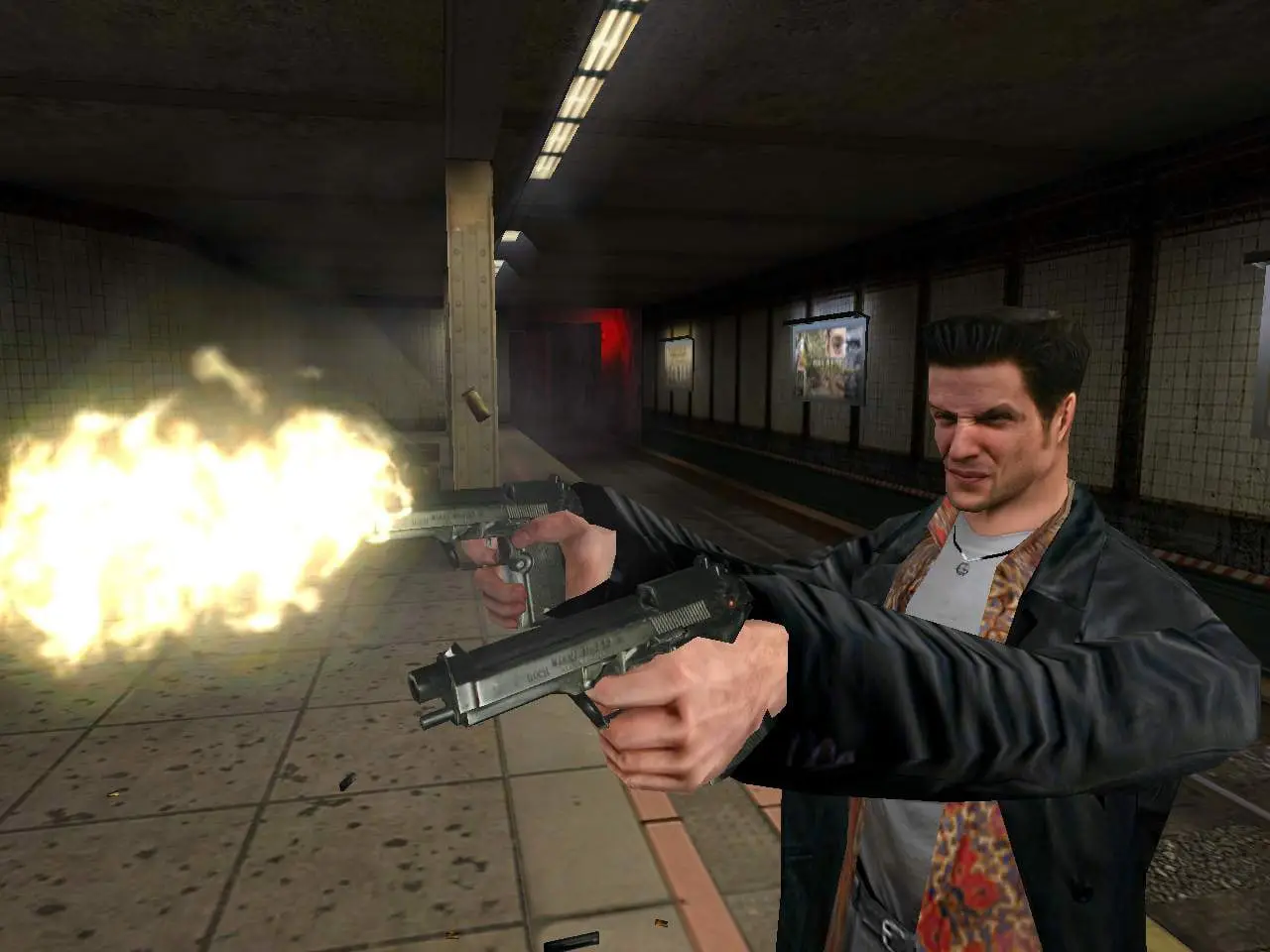
Max Payne (2001) — Max fires two pistols in a subway station 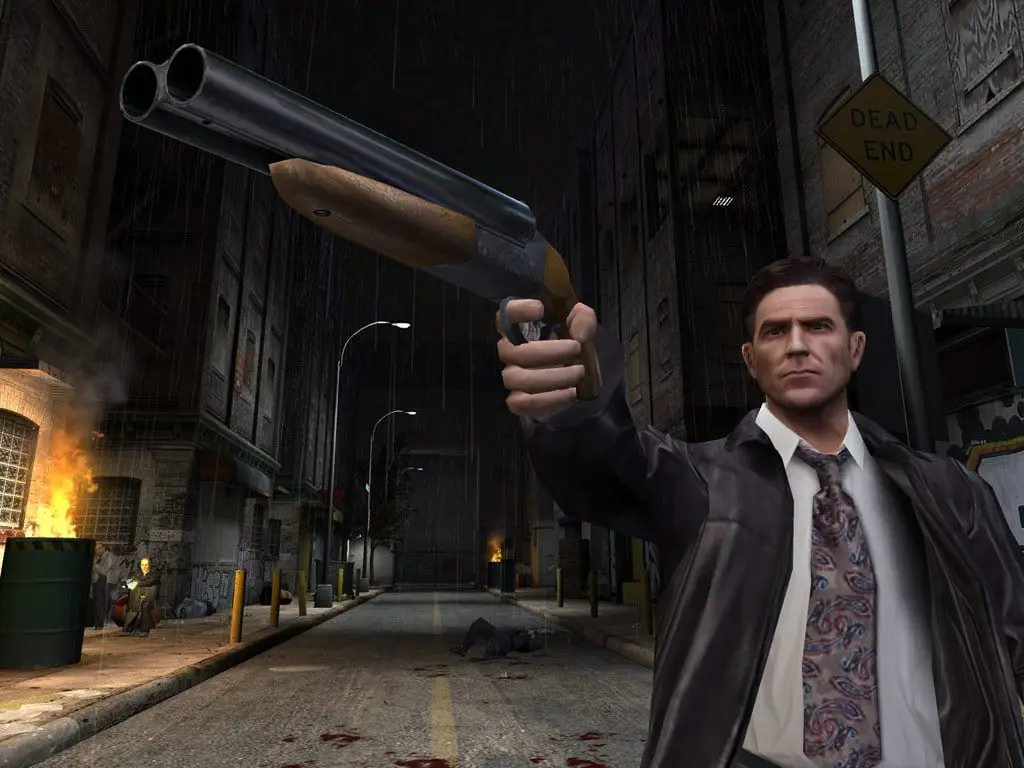
Max Payne 2: The Fall of Max Payne (2003) — a sawed-off shotgun in a dead-end alley 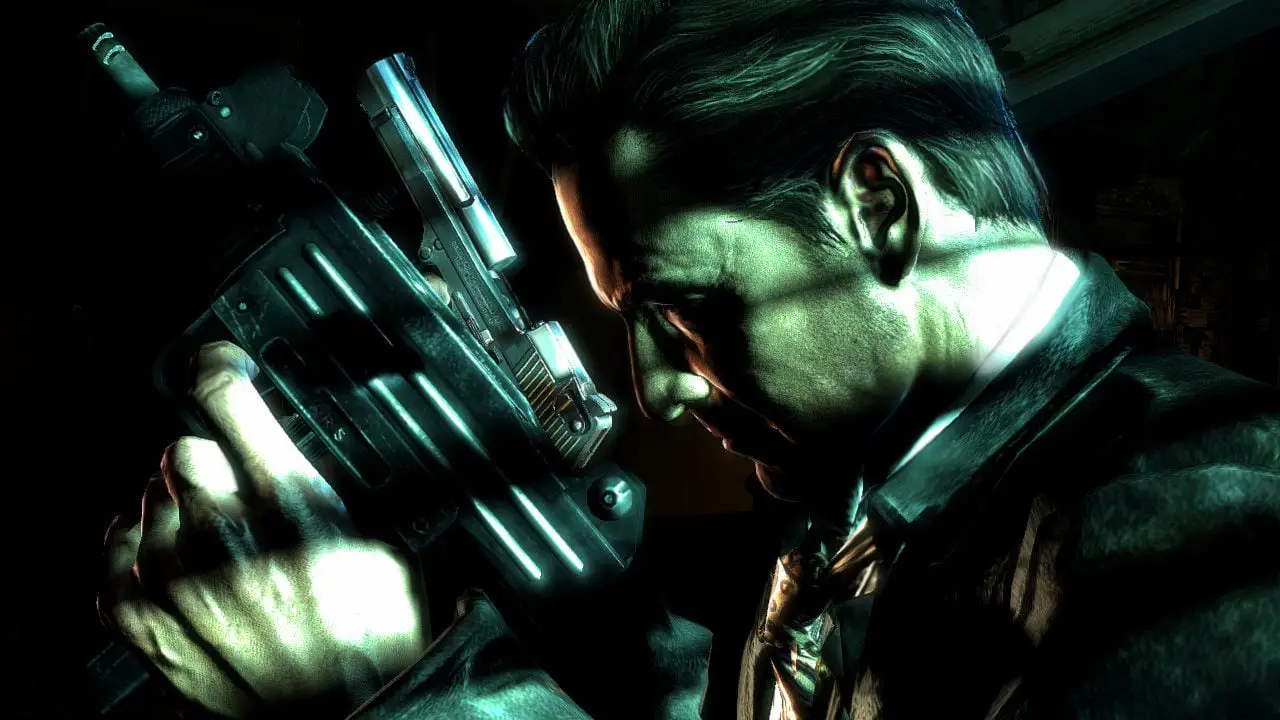
Max Payne 3 (2012) — Max, head bowed, a submachine gun and a pistol raised
The story behind the lines
The voice behind Max
James McCaffrey voiced Max in all three games, and Sam Lake, who wrote the first two, was Max’s face in the first. Their story is on the page about the people behind Max.
Meet the people behind Max